Mục lục
Discover essential notes when spraying perfume on clothes to enhance scent longevity without damaging fabrics. Tien Perfume shares professional tips on safe application, fragrance selection, and fabric care for a lasting, elegant scent.
Spraying perfume on clothes can be a powerful way to extend the longevity of your fragrance and create a lingering scent trail, but it requires careful consideration to avoid damaging fabrics or altering the perfume’s character. Unlike skin, clothing interacts differently with fragrance, and improper application can lead to stains, discoloration, or an uneven scent profile. At Tien Perfume, we believe that mastering the art of spraying perfume on clothes can elevate your fragrance experience when done correctly. In this comprehensive guide, we’ll explore essential notes when spraying perfume on clothes, including fabric compatibility, application techniques, fragrance selection, and storage tips. Whether you’re dressing for a professional meeting or a special event in Ho Chi Minh City, Tien Perfume will help you apply perfume to clothing with confidence and finesse.
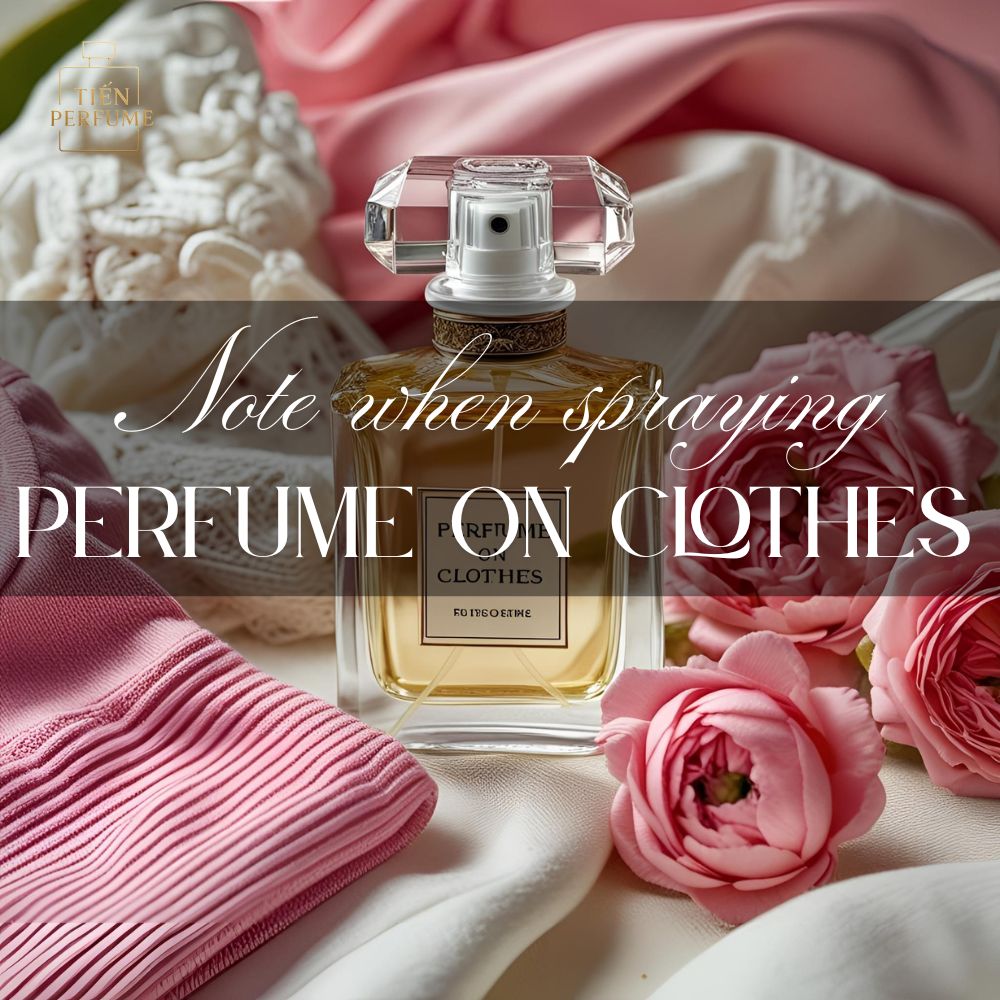
Spraying perfume on clothes can enhance your fragrance’s performance, as fabrics often retain scents longer than skin. However, it’s a technique that requires precision to ensure both the fragrance and your clothing remain in top condition.
Key Benefits:
Extended Longevity: Fabrics, especially natural fibers like cotton or wool, can hold scents for hours or even days, extending the fragrance’s lifespan.
Subtle Diffusion: Clothes create a soft, consistent scent trail, ideal for settings where a bold sillage might be overwhelming.
Versatile Application: Spraying on scarves, jackets, or linings allows for creative scent expression without direct skin contact.
Challenges:
Certain fabrics, like silk or satin, are prone to staining or damage from perfume’s alcohol content.
Fragrances may smell different on clothes than on skin due to the absence of body chemistry interaction.
Tip from Tien Perfume: Test perfumes on a small, inconspicuous area of clothing before full application to ensure compatibility and avoid damage.
Perfumes consist of fragrance oils, alcohol, and water, which interact uniquely with different fabrics:
Natural Fibers (Cotton, Wool, Linen): These porous materials absorb and retain fragrance well, making them ideal for spraying. They hold scents longer than skin, especially for base notes.
Synthetic Fibers (Polyester, Nylon): Less absorbent, synthetics may release fragrance more quickly but are less prone to staining.
Delicate Fabrics (Silk, Satin, Chiffon): High alcohol content in perfumes can damage or stain these materials, requiring careful application or avoidance.
Leather and Suede: Absorb fragrance strongly but are highly susceptible to staining and discoloration.
Key Considerations:
Alcohol Content: Eau de Cologne (EDC) and Eau de Toilette (EDT) have higher alcohol content, increasing the risk of staining delicate fabrics compared to Eau de Parfum (EDP) or Parfum.
Fragrance Notes: Heavy notes like oud or amber may cling longer to fabrics, while light citrus or green notes may fade faster.
Fabric Color: Light-colored or white fabrics are more prone to visible stains from colored perfumes.
Tip: Opt for EDP or Parfum on natural fibers like cotton or wool for longer-lasting scents with minimal risk of damage.
Choosing the right fabric is crucial for safe and effective perfume application:
Cotton: Highly absorbent, ideal for EDT or EDP. Suitable for casual shirts, scarves, or jackets.
Wool: Retains fragrance exceptionally well, perfect for winter coats or sweaters. Best for EDP or Parfum with warm notes.
Linen: Lightweight and breathable, good for EDC or EDT in warm weather, but test for staining on light colors.
Denim: Durable and absorbent, great for casual wear with EDT or EDP.
Inner Linings: Jacket or coat linings (cotton or polyester) are safe spots for spraying, minimizing damage to outer fabrics.
Fabrics to Avoid:
Silk: Prone to staining and fiber damage from alcohol-based perfumes.
Satin: Susceptible to discoloration, especially with colored fragrances.
Leather/Suede: Risk of permanent staining and texture damage.
Tip from Tien Perfume: Spray on inner linings or durable fabrics like cotton or denim to balance longevity and fabric safety.
Certain fragrances are better suited for clothing due to their note profiles and concentrations:
Chanel Chance Eau Fraîche (EDT): Citrus and jasmine, light and fresh, ideal for cotton shirts or scarves. Lasts 5-7 hours on fabric, ~2.5-3.5 million VND (30ml).
Jo Malone Basil & Neroli (EDC): Basil and neroli, crisp and clean, suitable for linen or cotton in warm weather. Lasts 3-5 hours, ~2-3 million VND (30ml).
Yves Saint Laurent Libre (EDP): Vanilla and amber, warm and elegant, perfect for wool jackets or scarves. Lasts 8-12 hours, ~2.8-3.8 million VND (30ml).
Lancôme La Vie Est Belle (EDT): Iris and light vanilla, soft and professional, great for cotton or denim. Lasts 6-8 hours, ~2-3 million VND (30ml).
Guerlain Shalimar (Parfum): Vanilla and amber, luxurious for wool or cashmere in cooler weather. Lasts 12-24 hours, ~3.5-5 million VND (30ml).
Tip: Choose EDT for casual fabrics like cotton or linen, and EDP or Parfum for heavier fabrics like wool for enhanced longevity.
Proper application ensures the fragrance performs well without damaging fabrics:
EDC: 5-7 sprays due to short longevity, focusing on durable fabrics like cotton or inner linings.
EDT: 4-6 sprays on absorbent fabrics like cotton or wool for balanced sillage.
EDP: 3-4 sprays on inner linings or heavier fabrics like denim or wool to avoid over-application.
Parfum: 2-3工夫
Inner Linings: Spray the inner lining of jackets, coats, or scarves to minimize damage to outer fabrics.
Scarves or Shawls: Lightly mist from a distance to add a subtle scent trail, ideal for evening wear.
Lower Hem or Cuffs: Apply 1-2 sprays to the hem of pants or cuffs of shirts for a discreet scent release.
Avoid Outer Delicate Fabrics: Do not spray directly on silk, satin, or light-colored outer garments.
Spray from 20-30 cm away to create a fine mist, reducing the risk of concentrated alcohol spots that could stain.
Hold the garment taut or hang it to ensure even distribution.
Tip from Tien Perfume: Test a small, hidden area of the fabric first, and avoid spraying on delicate or light-colored outer garments to prevent staining.
While skin is the traditional choice for perfume, spraying on clothes can be advantageous in certain scenarios:
Longevity: Fabrics like cotton or wool can hold scents longer than skin, ideal for all-day wear.
Sensitive Skin: Clothing application avoids direct skin contact, reducing irritation risks.
Layering Effect: Combining skin and clothing application (e.g., wrists and jacket lining) creates a layered scent experience.
When to Avoid Clothes:
Delicate or expensive garments that may stain or degrade.
Situations requiring a skin-blended scent, as fabrics lack body chemistry interaction.
Tip: Use clothing application to complement skin application for a balanced, long-lasting effect.
Perfume can affect fabric integrity, so follow these care tips:
Spot Test: Test a small area to check for staining or discoloration before full application.
Dry Cleaning: For delicate or heavily sprayed items, opt for dry cleaning to avoid water damage to fragrance residues.
Avoid Washing Immediately: Allow the fragrance to dissipate (1-2 days) before washing to prevent scent alteration.
Ventilation: Hang sprayed garments in a well-ventilated area to let alcohol evaporate, reducing fabric stress.
Tip from Tien Perfume: Use fragrance sparingly on clothes and prioritize dry cleaning for wool or delicate fabrics to maintain quality.
The environment affects how perfume performs on clothes:
Hot and Humid Climates (e.g., Ho Chi Minh City): Humidity can make fragrances cling longer to fabrics, so use fewer sprays (3-4 for EDT, 2-3 for EDP) on cotton or linen.
Cold and Dry Climates: Fabrics retain scents well in dry conditions, but light notes like citrus may fade faster, requiring an extra spray.
Indoor Settings: Air-conditioned offices may mute sillage, so apply 4-5 sprays of EDT to inner linings for subtle diffusion.
Outdoor Settings: Wind can disperse scents quickly, so use EDP or Parfum on absorbent fabrics like wool for longevity.
Tip: Adjust spray count and fabric choice based on environmental factors to optimize scent performance.
Avoid these errors to protect your clothing and ensure optimal fragrance performance:
Spraying on Delicate Fabrics: Avoid silk, satin, or leather to prevent staining or damage.
Over-Spraying: Excessive sprays (e.g., >7 for EDT, >4 for EDP) can lead to uneven diffusion and fabric damage.
Spraying Too Close: Spraying closer than 20 cm can cause concentrated alcohol spots, increasing stain risk.
Ignoring Fabric Color: Colored perfumes can stain light fabrics; test on a hidden area first.
Tip from Tien Perfume: Use a light hand and test on a small fabric patch to ensure compatibility and avoid costly damage.
Proper storage preserves fragrance potency for effective clothing application:
Avoid Heat and Light: Store in a cool, dry place (15-25°C) away from sunlight or humid areas like bathrooms.
Minimize Air Exposure: Keep caps on to prevent oxidation and bacterial contamination.
Don’t Shake Bottles: Shaking can disrupt the fragrance’s chemical balance, affecting its performance on fabrics.
Tip: Store perfumes in their original boxes or a cool drawer to ensure consistent quality when spraying on clothes.
Tien Perfume is the premier destination for authentic, high-quality fragrances in Ho Chi Minh City. With a curated collection from top brands like Chanel, Jo Malone, Yves Saint Laurent, Lancôme, and more, our expert staff provides personalized advice on applying perfume to clothes safely and effectively. Visit us to explore our fragrances and elevate your scent experience.
Cửa hàng nước hoa Tiến Perfume HCM – Cửa Hàng Tiến Perfume nước hoa Chính Hãng Giá Tốt Chất Lượng Sài Gòn
Địa chỉ: 136 Nguyễn Tư Giản, Phường 12, Gò Vấp, Hồ Chí Minh
Số điện thoại:
092.417.0766 – 08.9999.5613 (Kinh doanh 1)
079.435.7258 (Kinh doanh 2)
Clothing application extends fragrance longevity and creates a subtle scent trail when done correctly.
Natural and synthetic fibers react differently to perfume, affecting scent retention and fabric safety.
Cotton, wool, and denim are ideal, while silk, satin, and leather should be avoided to prevent damage.
Fragrances like Chanel Chance Eau Fraîche and Yves Saint Laurent Libre work well on absorbent fabrics.
Use 2-7 sprays on inner linings or durable fabrics, spraying from 20-30 cm for even distribution.
Clothing is ideal for longevity or sensitive skin, but lacks skin chemistry interaction.
Test for stains, use dry cleaning for delicate fabrics, and ventilate garments to protect fibers.
Humidity, heat, and indoor settings affect fragrance performance on fabrics, requiring adjusted spray counts.
Avoid over-spraying, delicate fabrics, or close-range application to protect clothing and scent quality.
Proper storage preserves fragrance potency for effective clothing application.
Mastering the notes when spraying perfume on clothes allows you to enhance your fragrance’s longevity and create an elegant scent trail without compromising your wardrobe. By choosing the right fabrics, fragrances, and application techniques, and following proper care and storage practices, you can ensure a seamless fragrance experience. Tien Perfume’s expert guidance helps you navigate the art of clothing application with confidence. Visit Tien Perfume at 136 Nguyễn Tư Giản, Gò Vấp, Ho Chi Minh City, to explore our authentic fragrance collection and receive personalized advice on spraying perfume on clothes. Let your scent linger beautifully on every outfit!